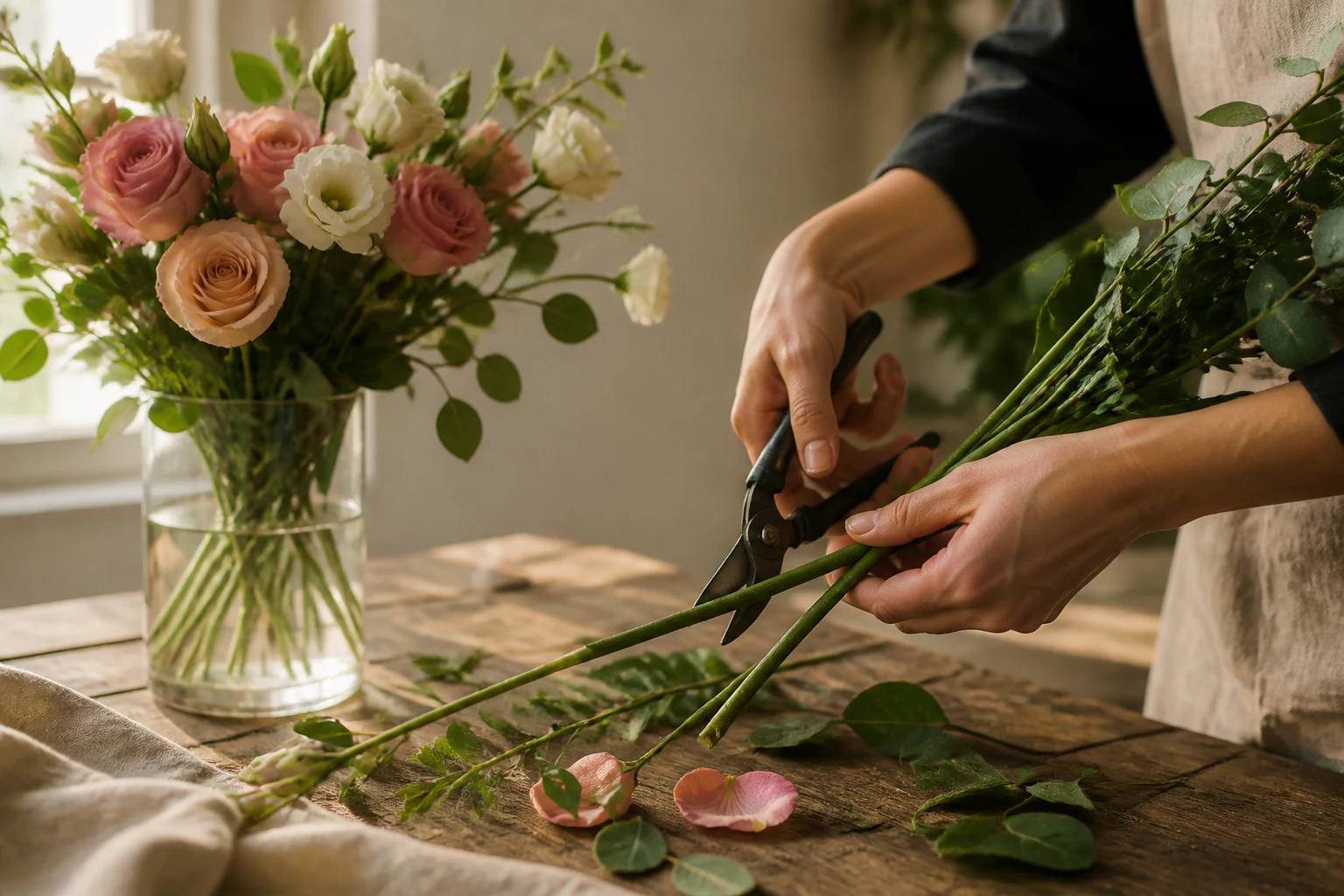
When your bouquet arrives
A few small preparations before placing your bouquet in water make a useful start.
Refresh the stems
Use clean sharp scissors to trim 1–2 cm from each stem. A gentle diagonal cut increases the surface that meets the water.
Keep leaves out of the water
Gently remove leaves that would sit below the waterline. The water stays cleaner and the bouquet looks fresher.
Choose a clean vase
Wash and rinse the vase well, then fill it with fresh water. Use enough to cover the lower stems and remove leaves that would sit in the water.
The setting each flower loves
Roses and lisianthus
They enjoy a bright corner but not direct midday sun. Change the water every other day and give the stems a light trim each time.
Tulips and stock
They do best in a cool spot away from direct sun. Use a shallow amount of water and check it daily, as tulips can drink quickly.
Hydrangeas and seasonal flowers
Check their water regularly. If a hydrangea head begins to droop, recut its stem and place it in clean water; a cool spot away from the sun may help.
Orchids
Bright indirect light is ideal. When the roots turn silvery, soak the pot briefly then let it drain fully. Do not leave water in the saucer.
Small details that keep flowers fresh
Keep them away from fruit
Gas released by ripening fruit can make some flowers age faster. Keep your vase a little away from the kitchen fruit bowl.
Keep away from heat sources
Air-conditioning vents, radiators and direct sun can stress flowers. Choose a cool, bright spot out of direct sunlight.
Remove fading stems
When one bloom has finished its time, remove it so it does not affect the rest. The remaining flowers stay tidy and lovely for longer.